
Key takeaways
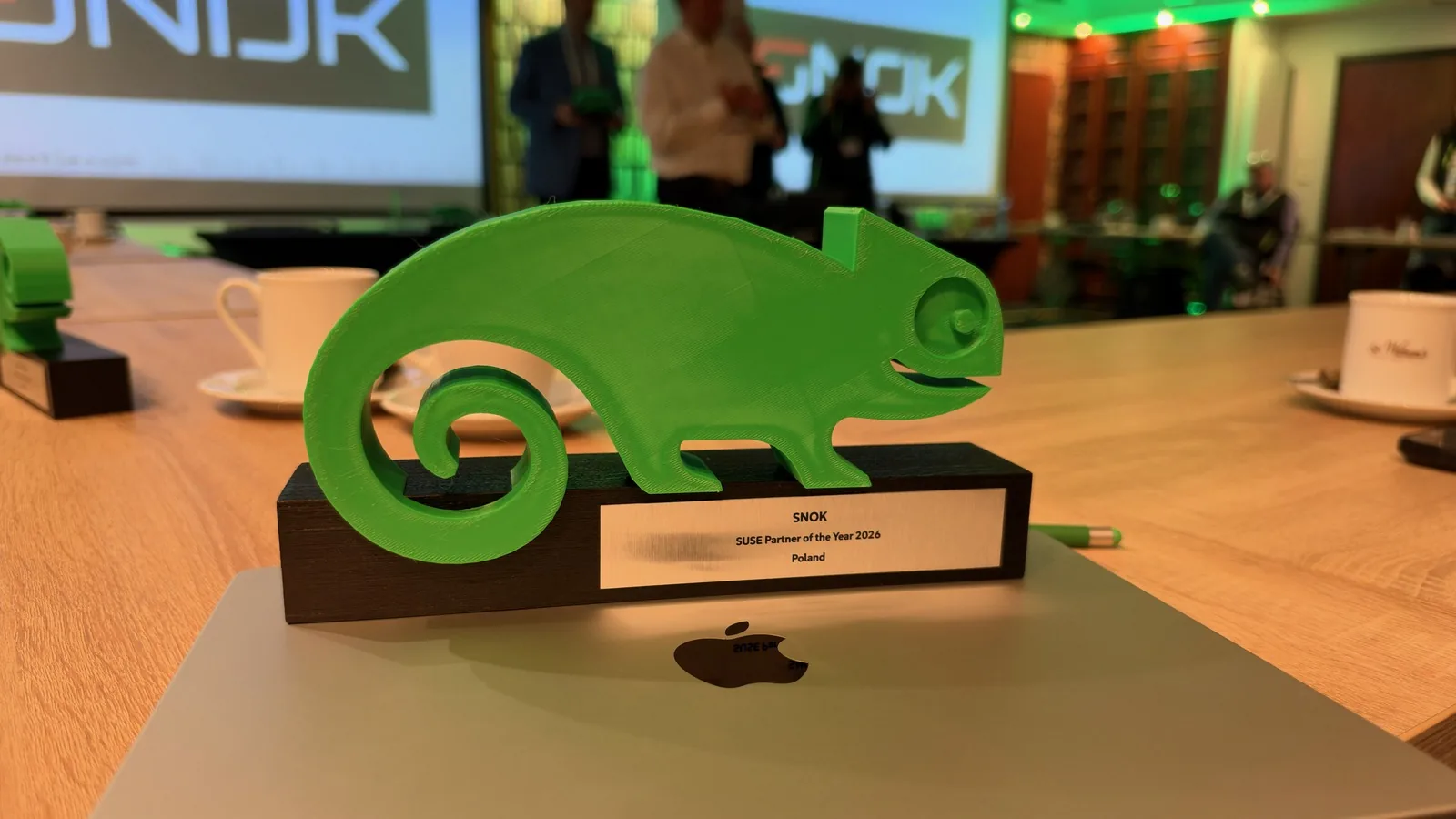
- SNOK was named SUSE Partner of the Year 2026 in Poland at SUSE Strategic Partners Meeting FY27 in Spała on 26 November 2026, for its work on SUSE Linux Enterprise Server for SAP Applications.
- On SLES for SAP 16, SAP HANA clusters run on the SAPHanaSR-angi agents only, and SUSE's guide states that a cluster without a valid fencing method is entirely unsupported.
- The SUSE cluster manages two SAP HANA System Replication sites; a third copy for disaster recovery runs as multi-target replication outside the cluster.
- SELinux replaces AppArmor in SLES 16 and SLES for SAP defaults to permissive mode, so moving to enforcing needs a policy tested against SAP HANA.
- General support for SLES for SAP 15 SP7 runs until 31 July 2031 and for 16.0 until 30 November 2027, with LTS included in the subscription until 2030.
Thursday 26 November, Hotel Mościcki in Spała, central Poland. At SUSE Strategic Partners Meeting FY27, SUSE named SNOK SUSE Partner of the Year 2026 in Poland. The award recognises our work on SUSE Linux Enterprise Server for SAP Applications, the operating system underneath SAP HANA and SAP S/4HANA. It is the first award of its kind for SNOK, and for me personally a day to remember.
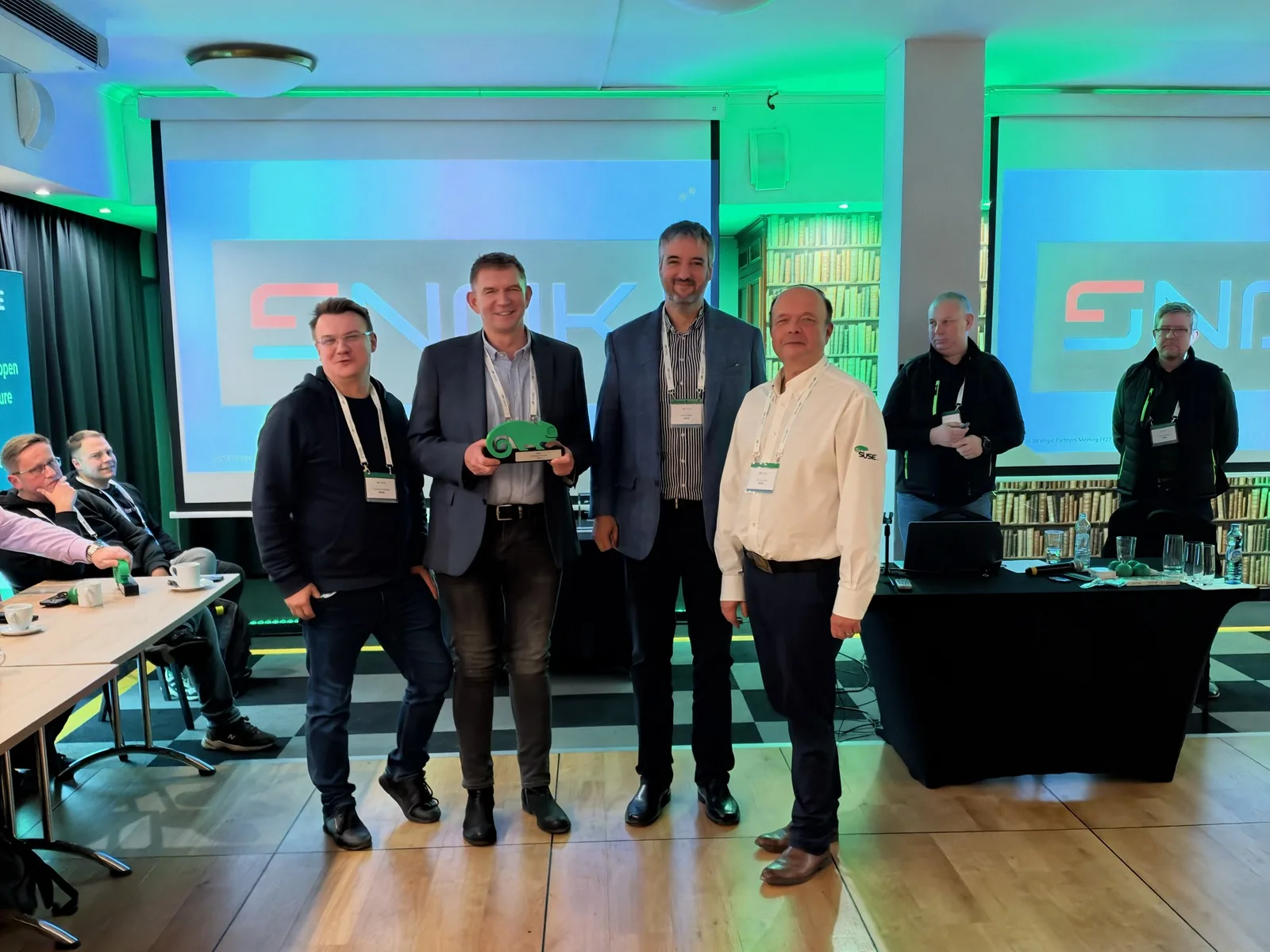
Pictured: Jacek Bugajski and Jarosław Zdanowski of SNOK, with Marcin Madey and Artur Duszczyk of SUSE Poland.
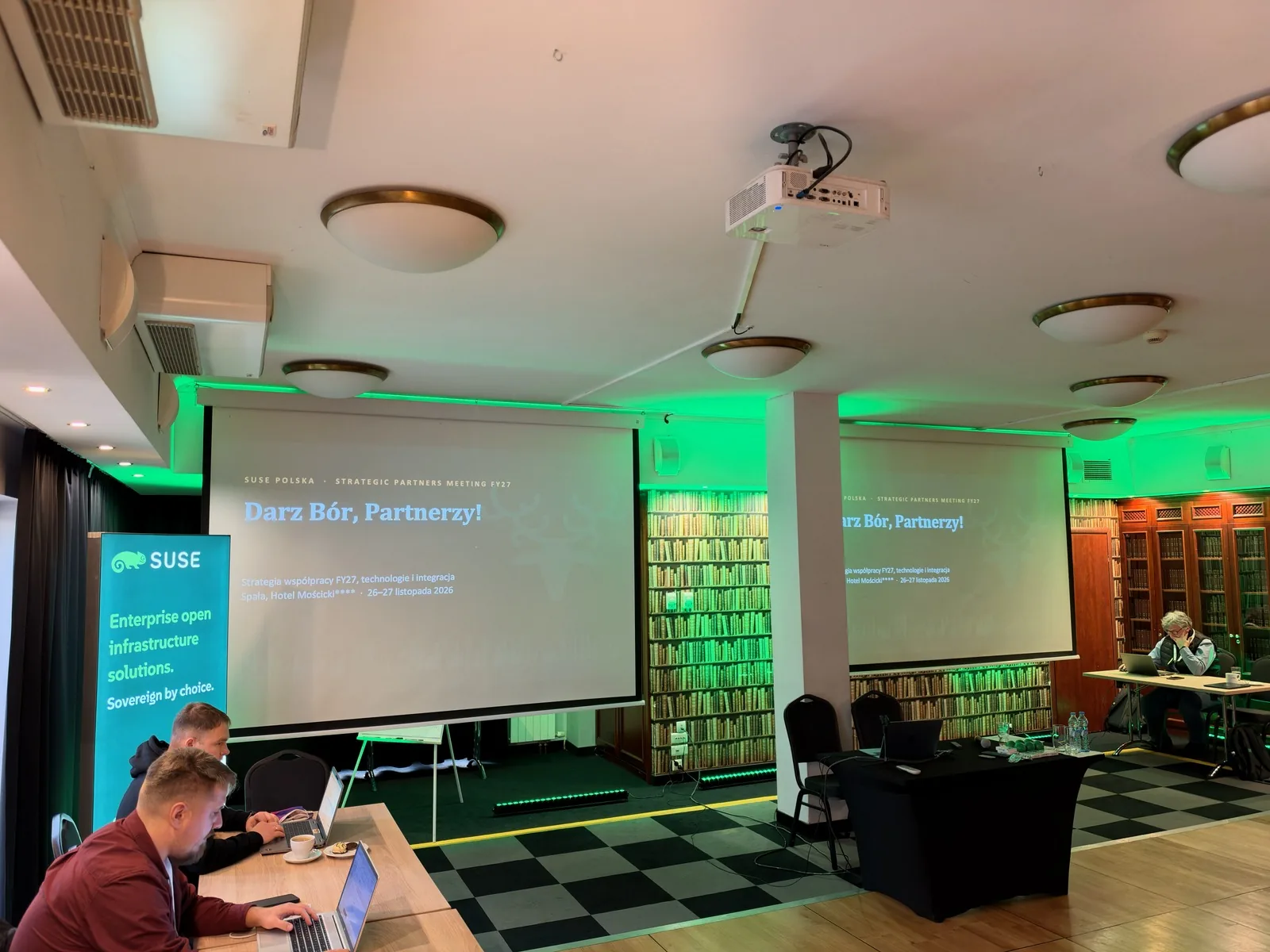
SUSE Strategic Partners Meeting FY27 in Spała
SUSE ran the meeting under the banner “Hunting with Partners” and kept to the hunting theme throughout: the midday gathering was a “call to the hunt”, the live technology demo a “review of the bag”, and the evening a hunters’ feast. The business session from 13:00 to 16:00 covered the year in review, product news and the SUSE roadmap, with a falconry display during the break.
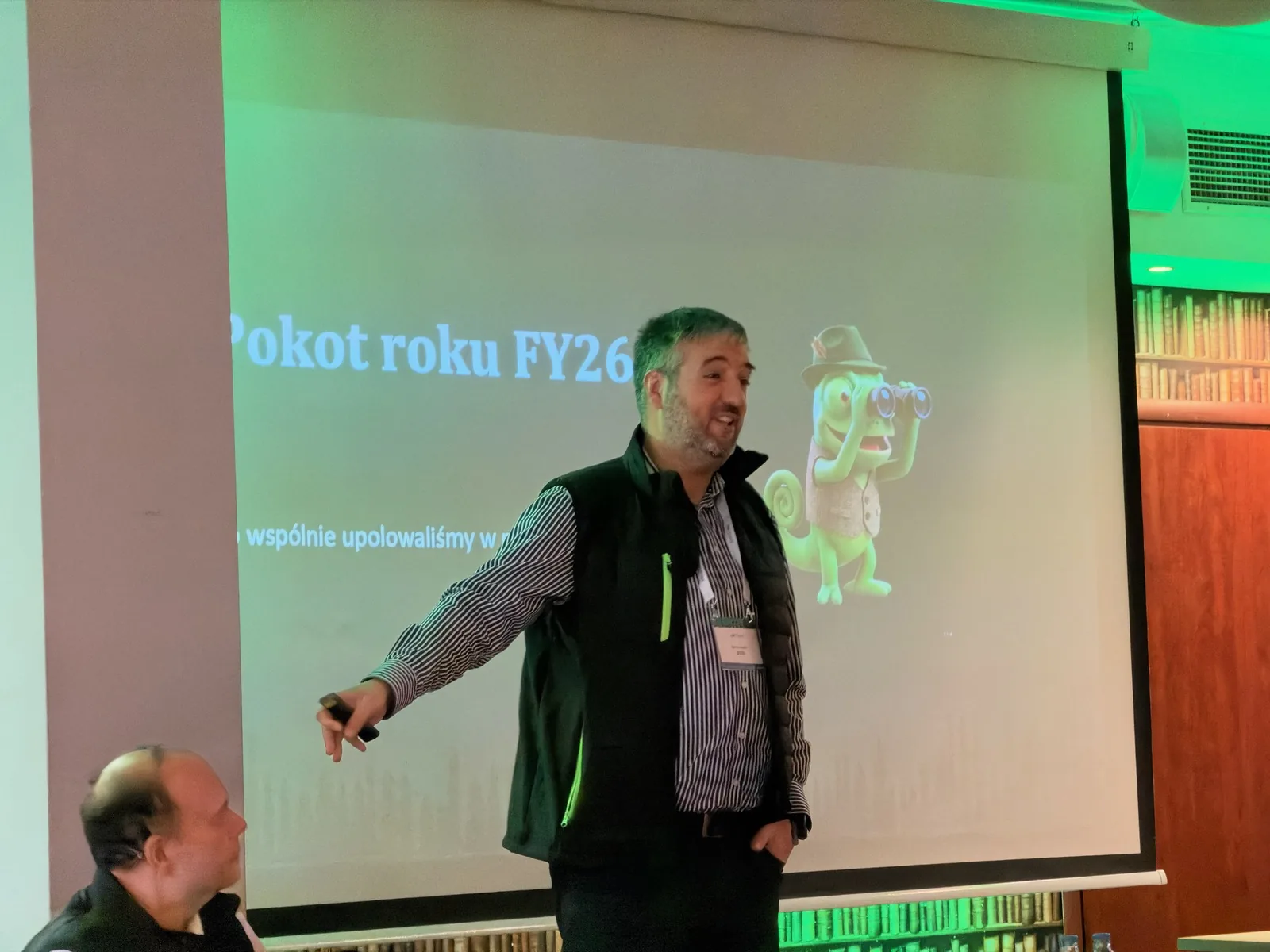
SUSE presented its year in review as “Pokot roku FY26” - the bag of the year. The partner of the year title came to us for results in SLES for SAP.
The work behind the award: SLES for SAP in production
Version 16 of SLES for SAP bundles the OS with SUSE Linux Enterprise High Availability and adds SAP-specific tooling: saptune for system tuning, Trento for configuration checks, SUSE-supported Ansible roles and live patching. Our practice in high availability, disaster recovery and platform hardening for SAP is built around these components.
SAP HANA high availability. On SLES for SAP 16, SAP HANA clusters run on the SAPHanaSR-angi agents only; the classic SAPHanaSR and SAPHanaSR-ScaleOut agents have been removed and remain supported on version 15 alone. SUSE’s scale-up guide is explicit: without a valid fencing method, the entire cluster is unsupported, and diskless SBD needs at least three nodes. For S/4HANA, the ENSA2 enqueue server (Standalone Enqueue Server 2) has been the default since ABAP Platform 1809, and on version 16 the simple mount configuration is mandatory. A cluster that will actually fail over in production starts with fencing and a failover test before go-live.
Disaster recovery. The SUSE resource agent manages two SAP HANA System Replication sites. A third copy at a secondary data centre is built as multi-target replication outside the cluster - a third site inside the same cluster is not supported. That is why we separate two decisions in our projects: automatic failover between the two cluster sites and a deliberate procedure for moving to the third site outside the cluster. We covered the difference between recovering from an outage and recovering from ransomware in our post on disaster recovery versus ransomware recovery in SAP.
OS hardening. In SLES 16, SELinux replaces AppArmor. Standard SLES runs it in enforcing mode, but SLES for SAP defaults to permissive, so moving to enforcing needs a policy tested against SAP HANA and the SAP applications on top. For version 15, SUSE maintains the “Operating System Security Hardening Guide for SAP HANA”, covering HANA-Firewall, disk encryption and minimal installation. Our firewall approach is described in hardening SAP HANA on SLES, and platform hardening was one of the topics at our joint workshop with SUSE on 3 November.
Configuration control and lifecycle. On SLES for SAP 16, saptune replaces the removed sapconf, and Trento checks clusters, hosts and SAP HANA and S/4HANA systems against SUSE and SAP best practice. General support for SLES for SAP 15 SP7 runs until 31 July 2031; for 16.0 it ends on 30 November 2027, with LTS included in the subscription until 30 November 2030. Before planning a move to 16, check SAP’s validation in SAP Note 2235581 and the cluster changes: switching from the classic agents to SAPHanaSR-angi is a project, not a package update.
Thank you
My thanks to the SUSE Poland team for this recognition and for a year of working together, and to Marcin Madey and Artur Duszczyk for presenting the award. It belongs to the whole SNOK team, above all to the people who build and run SAP HANA clusters for our clients. Thank you also to our clients for trusting us with their SAP systems - their production environments are the real measure of this work.
If you are planning SAP HANA high availability, a move to SLES for SAP 16 or a security review of the platform under SAP, let’s start with a conversation about SAP Basis 24/7 support and our partnership with SUSE.
Sources
- SUSE Strategic Partners Meeting FY27 - event page (accessed 26.11.2026)
- SUSE - About SUSE Linux Enterprise Server for SAP Applications 16.0 (accessed 26.11.2026)
- SUSE - SLES for SAP Applications 16.0 Release Notes (accessed 26.11.2026)
- SUSE - SAPHanaSR-angi support (accessed 26.11.2026)
- SUSE - SAP HANA System Replication Scale-Up, SLES for SAP 16 (accessed 26.11.2026)
- SUSE - HA support for S/4HANA and NetWeaver (accessed 26.11.2026)
- SUSE - Operating System Security Hardening Guide for SAP HANA, SLES 15 SP2 and later (accessed 26.11.2026)
- SUSE - Product Support Lifecycle (accessed 26.11.2026)