

In today’s fast-evolving business environment, personal data protection has become one of the most important aspects of any company’s operations. This challenge applies equally to large corporations and small businesses, both of which must ensure the security of the information entrusted to them. SNOK, a company specialising in solutions based on SAP systems, is well aware of the growing importance of this issue. Accordingly, we strictly adhere to the guidelines set out in the Data Processing Agreement for Cloud Services.
Why must real personal data not be used in SAP test systems?
One of the fundamental requirements of this agreement is a ban on using real personal data in SAP test environments, as their security cannot be guaranteed there. In this article, we explain why such practices are unacceptable and what risks and costs may result from breaching this requirement.
1. Protecting customer privacy
Real personal data includes sensitive information such as names, surnames, addresses, phone numbers, financial data and other confidential information. Using this data in test environments can lead to unauthorised disclosure or loss. Such a situation can result in a serious breach of customer privacy, affecting their trust in the company and its services.
2. Regulatory compliance
Modern data protection regulations, such as the General Data Protection Regulation (GDPR), require companies to ensure adequate measures to protect data against unauthorised access. Using real data in test environments is contrary to these regulations and may result in serious legal consequences.
A breach of personal data, particularly in the context of GDPR regulations, can lead to serious financial and legal consequences for companies. The penalties provided for failure to meet data protection requirements are severe and can reach as much as EUR 20 million or 4% of the company’s total worldwide annual turnover, whichever is higher. Such sanctions are designed to discourage companies from disregarding data protection rules and compel them to implement appropriate protective measures. In addition, a data breach can lead to a loss of customer trust, which in the longer term can clearly damage a company’s reputation and reduce its competitiveness in the market.
3. Preventing data leaks
Test environments are often less secure than production environments, making them more vulnerable to cyberattacks. Using real data in such systems increases the risk of a leak, which can have catastrophic consequences for the company and its customers. This is why it is so important to apply anonymisation or pseudo-anonymisation of data in test environments.
4. Risk management
Minimising the risk associated with data processing is a key element of any responsible company’s strategy. At SNOK, in line with SAP guidelines, we apply advanced data anonymisation techniques to ensure their security and protect our clients’ privacy. This means that even in the event of an incident, sensitive information will not be disclosed.
A significant increase in costs for pre-production systems
One of the most important aspects of implementing test environments, which is often overlooked, is the analysis of costs associated with different approaches to data processing. A key issue in this context is the use of pre-production (preprod) systems, in which production data can be used.
Why are pre-production systems using production data expensive?
The very fact that pre-production systems can use real production data makes their management considerably more costly. The reasons for this are varied:
-
Increased security costs: pre-production systems must have the same level of security as production systems. This means additional costs for implementing and maintaining data protection systems, which naturally raises overall operating costs.
-
Regulatory compliance requirements: because real production data is used, pre-production systems must meet the same regulatory requirements as production systems. This means higher spending on audits, regulatory compliance and potential fines for non-compliance.
-
Scope of security testing: security testing carried out in pre-production environments must be as comprehensive and frequent as that in production environments. This implies additional testing and monitoring costs.
-
Duplication of infrastructure: maintaining a full-value copy of the production environment as a pre-production environment means doubling IT infrastructure investment. This requires more hardware resources, software licences, and human resources to manage the environment.
-
Data management costs: storing and processing large volumes of production data in a pre-production environment involves additional data management costs, including encryption, compression and backup maintenance.
Alternative approaches – data anonymisation and virtual test environments
SNOK, having analysed both the risks and costs associated with data processing in test and pre-production environments, strongly promotes the use of alternative approaches:
-
Data anonymisation: the process of anonymising data involves removing or modifying information that allows an individual to be identified (such as names, identification numbers, addresses). This allows data to be used in testing without the risk of disclosing sensitive information.
-
Virtual test environments: using virtual, automated test environments that are created on demand and deleted once testing is complete allows for a significant reduction in the costs associated with maintaining infrastructure.
-
Data simulation: creating synthetic data that mimics real production data but does not contain real personal information is another effective method of protecting data during testing.
Generating test data with UiPath
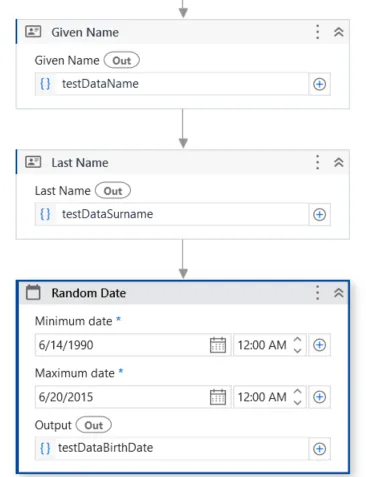
In the context of a comprehensive approach to data protection and cost minimisation, it is worth noting the capabilities offered by UiPath – a leading business process automation tool. UiPath offers advanced test data generation features that can significantly support testing processes in SAP systems.
How does UiPath support test data generation?
-
Automatic data generation: UiPath enables the creation of realistic test data through automatic generation of values that mimic real production data. This makes the data statistically representative while remaining safe.
-
Integration with SAP systems: UiPath offers ready-made integrations with SAP systems, enabling automatic retrieval, processing and generation of test data in a secure manner. This makes the data generation process fast and efficient.
-
Creation of test scenarios: UiPath enables the automation of entire test scenarios, where data is generated, processed and analysed without the need for manual intervention. This allows large-scale testing to be carried out in a shorter time and with less risk of human error.
Choosing the right method
Through in-depth analysis of potential threats and costs, our company makes strategic decisions regarding data protection. This approach enables us to:
-
Optimise costs: by choosing the right data processing methods, we are able to reduce expenditure without compromising on security or regulatory compliance.
-
Increase operational efficiency: adopting the right procedures allows us to carry out tests quickly and safely, significantly accelerating the introduction of new solutions to the market.
-
Build customer trust: clients appreciate our approach to data protection, which translates into greater trust and loyalty towards our services.
-
Meet regulatory requirements: by strictly complying with legal regulations, avoiding fines and ensuring compliance becomes simpler and more predictable.
Summary
Personal data protection is not only a matter of business ethics, but also a legal and practical requirement. Companies that want to stay ahead of the market and avoid costly mistakes must adopt a comprehensive approach to data management in test and pre-production environments. In line with SAP guidelines and its own responsible risk management policy, SNOK does not process real personal data in test environments. In pre-production systems, we operate with the utmost care in order to minimise the costs and risks associated with this approach. The use of tools such as UiPath supports our strategy of generating secure test data, enabling effective testing processes that comply with regulatory requirements.
Please do not hesitate to contact us if you have any questions regarding our data protection policy and security procedures. Together, we can ensure the secure and efficient processing of data, which is the foundation of modern business operations.